
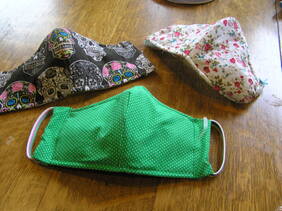
I held up the two pieces of covering the convent had sent for us to put on for school. I’d put on the shorts once before so I’d figured them out, but sorting my head and arms into the shirt was harder. Once the shirt covered my head, I couldn’t see what I was doing or where I my arms went. I put an arm through the neck hole, then tried to get my big head through the hole for the arm. I pulled it off and tried to put my arms in the arm holes, then pull it over my head. I got my head through the right hole, but the rest of the shirt bunched up around my arms and nose. On the third try, I was sweating with exertion, but got the shirt on so it covered my bare body.
I’ve never worn covering or been to school before. I’m not ignorant. I can count goats on the hillside and tell the time of night by the stars. I know which plants will draw the poison out of a festered wound, and which will cause a goat to miscarry. My mama and grandmama are the local healers, and I learned lots from them, but I don’t know how to read and write. I don’t know the common language used outside the mountains. I plan on learning all that today.
Once covered, I showed myself to Mama. “Where did Uncle C’Tis get all those grandchildren that built the school?
Mama answered, “I don’t know. He said something about LooCee gathering them.”
Grandmama sat on the floor picking leaves from their stems and putting them in a basket to dry. “I remember when I helped LooCee and Young C’Tis into this world, but I don’t know where the others came from.” She looked up at me. “All we know is that they’re all educated, and they’ve built a school. This is a great thing for you. ”
Mama gave me a hug. “Grandmama and I will ride the next van down the mountain.” She glanced at her mama on the floor. “We’ll have a class too. Uncle C’Tis will tell us about his adventures in the outside world. Now, off you go.”
I went outside to meet my friend N’Ra and her brothers and sisters on the path in front of our house.
Her little sister greeted me. “Look H’Na, I have a dress. It looks like the sky.”
N’Ra lifted her youngest sister higher on her hip. “The dress is blue. A’Ln told me the sky is blue. Your dress is blue. A’Ln says you will learn the names of all the colors.”
I started to sweat again. Until last week when Shaman gave us lessons on outsider ways and their language, I’d thought everything was just the way it was. I didn’t know things were described by how they look. Color is an outsider idea. Now, did I need to learn the names for the colors? Why did colors have names, anyway? Did the sky and the dress have souls?
H’Ree, N’Ra’s littlest brother who could walk, tugged on the bottom of N’Ra’s covering—shorts and a shirt like mine. “I don’t want to go to the convent. You won’t let them take me to the convent, will you?”
N’Ra brushed the hair out of her brother’s face with her free hand. “You won’t have to go to a convent. A’Ln told me that they built the school in the mountains so children won’t have to go away like LooCee did.” She sighed like she always did when she mentioned A’Ln.
I narrowed my eyes at N’Ra. “You talked to A’Ln a long time. Did you even notice his brother, U’Kee? He looks like a big mountain man, like in the stories of the old days.” I grinned. N’Ra and I wouldn’t have to marry T’Vun. We had lots of men to choose from. LooCee’s brothers were good to look at, and they knew how to do things with machines, and they could read and write. I sighed. U’Kee was my idea of the perfect man. He laughed and helped his sisters. Once when they came home to plant their crops, he gave me a second piece of cake. He carried it right to me on a plate and sat beside me while I ate.
N’Ra nodded. “I met U’Kee. He won’t live here much because he still has to go to school in the city. A’Ln said he finished all his school. He even has a piece of paper with writing on it that says he finished school. Did you know LooCee has more brothers we haven’t seen? She says one is in the army and another works in the city and goes to school with her.” She skipped a couple steps.
The morning sun broke over the top of the mountain, and I lifted my face to the warmth. Life was glorious. The air smelled sweet with only a hint of goat. The sun was warm. I was on my way to school, and I’d never have to marry T’Vun, the only unmarried man in the village.
I said, “Did you hear that Papa T’Vun asked Uncle C’Tis for LooCee to marry T’Vun? And Grandmama actually laughed when she told mama this…Uncle C’Tis said he couldn’t have her.” I spun in a circle with glee.
N’Ra counted her brothers and sisters to make sure they were keeping up with us. “I heard T’Vun wants Martha now.”
I gloated over my own news. “Martha told me she’s going to be a healer. She wants to learn what Grandmama knows. Martha said she won’t marry for years and years yet, if ever.”
We slipped through the pass that marked the end of our valley and prepared to climb inside the noisy van LooCee’s family used when they went outside the mountains. N’Ra lifted her sisters up the high step from the ground to the van. She turned to lift H’Ree, but he balked and started to cry.
Young Hosh patted his brother on the head. “Oh, be quiet. This is fun. A’Ln is showing me how to drive it. He told me that in the city, Young C’Tis learned to drive and got a job driving all sorts of vans, and he can fix them if they break.”
H’Ree hung back, eyeing the van. “Is it going to break?”
Mama Hosh caught up to her children. “It will be fine. The outsiders ride in these machines all the time, and I’ll be with you. LooCee can drive, and she’s teaching Nicole to drive too.”
I looked behind me for Mama and Grandmama. Were they coming yet? Grandmama wanted to learn how the outside healer made Young C’Tis’s daughter well. I smiled at Grandmama’s excitement over the school. She’d met outsiders before the big flood and told me all she remembered.
Faster than I could believe, we rode down the mountain and stopped in front of the new stone schoolhouse. It was as big as a mountain. Once, before the C’Tis family came home from the city this last time, N’Ra, Young Hosh and I snuck down here and explored the school building. It had rooms at the ground level and more rooms upstairs that were right in the middle of the sky. The building had windows. When we saw them, the windows were just holes in the wall. Now, the workers had covered them with glass. Glass was another new word for me. It was clear as water but harder than ice. The morning sun made the glass shine like our spring when the water was still.
I stared around me. I’d never seen so many people in one place before. There were people from my village and LooCee’s family and people named Gilbert from a family lower down the mountain. There were outsiders and mountain people I’d never seen. Shaman told us the vans would bring people who lived farther back in the mountains to the school. The people made more noise than a herd of goats, and they smelled worse. I followed the crowd, trying not to breathe. The smell made my throat hurt.
Uncle C’Tis stood beside the path leading to the school doors. “H’Na, welcome to my school.” He actually spoke to me and remembered my name.
I almost forgot my manners in my excitement, but I remembered to say, “Thank you Uncle C’Tis. I’m excited to be here.” I tried to brush the tears off of my cheeks. “I’ve never been this happy before in my whole life.”
“You’re a good girl.” Uncle C’Tis praised me. Nobody had ever called me a good girl before. I skipped into the building and stared at the high ceiling. Even a big mountain man, like LooCee’s brother U’Kee, couldn’t touch that ceiling.
Pia touched my elbow. “Come this way. Your first class will be in the big room.”
I followed her to the big room. It was big. All of our house could fit in this one room with space left over for the goat sheds. People milled and talked. I watched A’Ln leading people to chairs. He seated the older women near the front as is proper. He passed younger children to his brothers and sisters. “Here, take H’Lee to the nursery class.”
I felt my eyes grow wide at the idea that even the youngest children would have a class. Would they learn to read and write before I did?
A’Ln passed the girls N’Ra held to Teacher Therese and said to N’Ra, “You can sit in this row of chairs. I’ll sit behind you.”
I smiled. N’Ra and I were the same. I could sit with her. That would be proper.
For our first class, Uncle C’Tis talked to us about learning and how important it was and about all the things he learned the year he lived outside with LooCee. “I learned to read and write in the common language. All of my children helped me learn. I also had lessons to learn how to use electricity to light the house. This afternoon my grandson, C’Tis, will turn on the generator that makes electricity and show you a movie of where we lived and of LooCee’s school, called Capital University.”
For my next class, Martha took most of the children and younger people up the stairs to a room to give us our first lesson in the common language and reading and writing. I learned that in the common language, my name would be pronounced Hannah. I loved the sound of my name. Hannah didn’t sound like a little girl who cleaned goat pens and carried water. Hannah sounded important.
When school let out, the elders rode the first van back up the mountain. Children too small to walk up the mountain rode with them or in the next van. Young Hosh grabbed me by the arm. “Hey, we’ll get home sooner if we walk. Come on.”
Mr. A’Kee held H’Ree in his arms. “Good idea, Hosh. After sitting all day, the climb will make you feel better. I’ll make sure the little ones get home safely.”
He bounced H’Ree on his hip, then looked right at me and N’Ra and smiled. “I hope you two can come spend some nights with my girls. They want to learn more of your native language.”
We nodded and turned to race up the mountain. Once we were high enough that nobody could hear us, I paused. “Young Hosh, I don’t understand about Mr. A’Kee. LooCee and C’Tis call him Papa, but I know Papa C’Tis was LooCee’s papa, but he died. Why do they call Mr. A’Kee Papa?”
Young Hosh grinned at me. “I asked Dau that question. He said that when he was tiny his papa and mama died just like LooCee’s mama and papa died. He said lots of people died and whole villages of children didn’t have papas and mamas, so some people who didn’t have children, took them as their own. A’Kee and U’Nice took LooCee and Martha and Dau and all the others.”
I thought my head would explode. “I didn’t know outsiders were like that— taking care of children and stuff. I thought they were…well…stupid and cruel and would run off and leave their babies behind like Young C’Tis’s wife.”
N’Ra said, “A’Ln told me that some people do leave their children or beat them, but that’s rare. He says most people are like A’Kee and want to take care of children. He says outsiders aren’t clumsy or cruel and that people are the same everywhere.”
We arrived at the pass just as the van with the little children stopped at the turn-around. Mrs. T’vun was there to gather her two little children. Young Hosh took his younger brother on his hip and N’Ra took her two younger sisters. Mrs. T’Vun said, “H’Na, help me with my little ones. T’Kee is such a big boy I can’t carry him and his sister.”
I wanted to tell Mrs. T’Vun to make her spoiled boy walk, but I wanted to be a nice person like LooCee and her sisters. I remembered how A’Ln and Dau helped with the little children and wondered where Young T’Vun was. Instead of talking back, I picked up the little girl, then took the Hoshs’ youngest, H’Lee.
When H’Lee was born, Grandmama had asked me to help her. I felt like H’Lee was part mine because I’d handed Grandmama cloths and herbs while she checked the baby’s progress.
Both of the children in my arms held a piece of paper with colored marks on it. I was surprised that the teachers let the babies hold a colorer. I scowled. “What is the word for the colored things for making pictures?”
H’Ree answered. “Crayon. I had a black crayon and a green crayon and a brown crayon. See, I made demon’s heads on my paper.”
I grinned at H’Ree’s picture of the ugly little thorns that got stuck in bare feet and goats mouths if we weren’t carful. How nice it would be to have shoes and never get a thorn stuck in my foot. “Those do look just like demon’s heads.”
The other children held up their papers for me to see. T’Kee said, “I drew goats.” His paper held a big goat surrounded by three baby goats. Yes, he would draw a picture of triplets. The T’Vun goats dropped more triplets than anybody else’s.
I set T’Ka on the ground at the T’Vun’s gate and followed N’Ra and Young Hosh down the path to their house.
Once home, I had to hurry to fetch water, then pat bean flour and milk into cakes for our dinner. Mama had to hustle to tend the goats while Grandmama fussed in her garden. When we all sat down on the floor to eat, all we could talk about was school.
Mama said, “U’Nice told me she’d teach me to drive the van. I don’t know about that. It goes so fast, I’m not sure it’s natural.” She tapped Papa on the wrist. “And don’t think you’ve missed all the excitement. Tomorrow, the van will take everybody who didn’t see the movie today down the mountain to see it. And Uncle C’Tis can read and write. Isn’t that amazing?”
Grandmama interrupted Mama. “Miss Martha wants me to teach the outside students about plants. She says they need to know which ones they can eat and which ones are poison. I’m going to be a teacher—imagine that.”
Mama interrupted Grandmama. “Uncle C’Tis invited H’Na to visit his granddaughters. She’s going to teach them our language. She and N’Ra are to spend the night with his girls sometimes.”
Mama took a breath, so Papa got a chance to speak. “H’Na is needed at home. Who will fetch the water if she stays at school all the time? We need her to tend the baby goats.”
Grandmama slapped the floor beside her. “H’Na is going to learn outsider ways. She’s going to learn how the outsiders made C’Tis’s baby well when I thought she’d die. H’Na is going to go to school like Young LooCee does. We are T’Niks. A member of the T’Nik family will not do less than any of the C’Tis family. If that means she stays with the girls at school, she’ll stay with the girls at school. You can carry the water and tend the baby goats.” She glared at Papa.
My head spun. I was going to learn outsider ways? I was going to go to school away from home? I would leave everything and everybody I knew? The last of my bean cake turned to dust in my mouth. “Papa, I’ll carry water before I go to bed tonight, then I’ll put the baby goats away. If I keep up with my chores while I’m here, there won’t be much for you to do when I stay at school.”
I stood and grabbed an empty bucket waiting by the door. I almost ran to the spring. I didn’t want to hear any more talk about sending me away to school. I’d seen a picture of LooCee’s school in the city. It was huge. Staying with Martha and Nicole would be fun, but going to that huge school in the city was unthinkable. I carried my bucket of water up to the goat pen and poured it in their pool.
Tears flowed down my cheeks. I didn’t know what to think. Why had Papa been so eager to marry me off to T’Vun, but now he said I had too many chores to stay at school? Mama always said she needed me at home, and now she smiled and nodded when Grandmama said I’d go to LooCee’s school. I sniffed and wiped my nose on my bare arm and looked at the goats. They needed more than one bucket of water, so I picked up my bucket and went back to the spring.
Young T’Vun was sitting beside the spring. He deigned to speak to me. “What are you doing out so late?”
I rolled my eyes at him. Keeping the spring between us, I answered, “Fetching water for the goats. I need to do my chores at night so I can go to school during the day.”
“I’m not going back to any school where they let girls teach.” T’Vun stuck out his lower lip.
I smiled. T’Vun wouldn’t be at school. “It’s probably more important for you to stay home and help your papa.” I backed away, hoping T’Vun wouldn’t try to follow me.
It was dark by the time I emptied the second bucket of water into the goat’s pool. I could see well enough by starlight. I should get more water for the house, but T’Vun might still be at the spring. I went home.
When I came through the door, Mama said, “That’s enough chores for tonight, H’Na. The teachers told us that you would need to go to bed early because learning is hard work, and you’ll need all the sleep you can get.”
I nodded. “Is that why I feel so tired? I learned so much today, I’m ready to burst.” I scowled. “Maybe T’Vun doesn’t want to go to school because it made him tired.”
Grandmama answered from her place on the rug in front of the fire. “T’Vun doesn’t want to go to school because Young C’Tis scolded him for not wanting to have Miss Martha for a teacher.” Grandmama chuckled. “I don’t think Miss Martha is going to marry T’Vun despite what he thinks.”
Mama snorted. “He’ll have trouble finding a wife among those outsider women. Their men work hard and are kind.” Mama glanced at Papa, then turned to her mama. “Did you see how A’Ln made the little Hosh boys laugh?”
I went to my bed behind the fireplace with my head spinning so much I could barely stand. I sank down on my goat skin and cradled my head on my arm. Ideas still churned in my brain. I tried to sort out all I’d learned. Words like crayons jostled for attention with ideas like spending the night with Martha and Nicole. Hannah was my outsider name. Martha said it was a good name. T’Vun wouldn’t be at school. Good. I reached out and touched my school clothes laying on the floor beside me. I wasn’t going to marry T’Vun. I was going to go to school like the outsiders do. I smiled remembering H’Ree’s picture of the demon’s heads. There was so much to learn at school.
Papa’s voice drifted to me on the night air. “I’ll fill the water buckets.”
I felt his footsteps vibrate through the floor.
Papa. I always thought Papa made the rules in our family. Grandmama is respected because she’s the healer, but I thought Papa made the rules. Tonight, Grandmama had made the rules and papa obeyed. My eyes drifted closed. Grandmama made the rule. There was lots to learn at school, but just maybe, there was enough to learn in my own home if I just kept my eyes open.
To learn more about Hannah's school and how Grandpapa C'Tis got all those grandchildren Read Lucy Goes Home. https://www.amazon.com/Lucy-Goes-Home-Sewer-Book-ebook/dp/B07JYKKSF1/ref
I’ve never worn covering or been to school before. I’m not ignorant. I can count goats on the hillside and tell the time of night by the stars. I know which plants will draw the poison out of a festered wound, and which will cause a goat to miscarry. My mama and grandmama are the local healers, and I learned lots from them, but I don’t know how to read and write. I don’t know the common language used outside the mountains. I plan on learning all that today.
Once covered, I showed myself to Mama. “Where did Uncle C’Tis get all those grandchildren that built the school?
Mama answered, “I don’t know. He said something about LooCee gathering them.”
Grandmama sat on the floor picking leaves from their stems and putting them in a basket to dry. “I remember when I helped LooCee and Young C’Tis into this world, but I don’t know where the others came from.” She looked up at me. “All we know is that they’re all educated, and they’ve built a school. This is a great thing for you. ”
Mama gave me a hug. “Grandmama and I will ride the next van down the mountain.” She glanced at her mama on the floor. “We’ll have a class too. Uncle C’Tis will tell us about his adventures in the outside world. Now, off you go.”
I went outside to meet my friend N’Ra and her brothers and sisters on the path in front of our house.
Her little sister greeted me. “Look H’Na, I have a dress. It looks like the sky.”
N’Ra lifted her youngest sister higher on her hip. “The dress is blue. A’Ln told me the sky is blue. Your dress is blue. A’Ln says you will learn the names of all the colors.”
I started to sweat again. Until last week when Shaman gave us lessons on outsider ways and their language, I’d thought everything was just the way it was. I didn’t know things were described by how they look. Color is an outsider idea. Now, did I need to learn the names for the colors? Why did colors have names, anyway? Did the sky and the dress have souls?
H’Ree, N’Ra’s littlest brother who could walk, tugged on the bottom of N’Ra’s covering—shorts and a shirt like mine. “I don’t want to go to the convent. You won’t let them take me to the convent, will you?”
N’Ra brushed the hair out of her brother’s face with her free hand. “You won’t have to go to a convent. A’Ln told me that they built the school in the mountains so children won’t have to go away like LooCee did.” She sighed like she always did when she mentioned A’Ln.
I narrowed my eyes at N’Ra. “You talked to A’Ln a long time. Did you even notice his brother, U’Kee? He looks like a big mountain man, like in the stories of the old days.” I grinned. N’Ra and I wouldn’t have to marry T’Vun. We had lots of men to choose from. LooCee’s brothers were good to look at, and they knew how to do things with machines, and they could read and write. I sighed. U’Kee was my idea of the perfect man. He laughed and helped his sisters. Once when they came home to plant their crops, he gave me a second piece of cake. He carried it right to me on a plate and sat beside me while I ate.
N’Ra nodded. “I met U’Kee. He won’t live here much because he still has to go to school in the city. A’Ln said he finished all his school. He even has a piece of paper with writing on it that says he finished school. Did you know LooCee has more brothers we haven’t seen? She says one is in the army and another works in the city and goes to school with her.” She skipped a couple steps.
The morning sun broke over the top of the mountain, and I lifted my face to the warmth. Life was glorious. The air smelled sweet with only a hint of goat. The sun was warm. I was on my way to school, and I’d never have to marry T’Vun, the only unmarried man in the village.
I said, “Did you hear that Papa T’Vun asked Uncle C’Tis for LooCee to marry T’Vun? And Grandmama actually laughed when she told mama this…Uncle C’Tis said he couldn’t have her.” I spun in a circle with glee.
N’Ra counted her brothers and sisters to make sure they were keeping up with us. “I heard T’Vun wants Martha now.”
I gloated over my own news. “Martha told me she’s going to be a healer. She wants to learn what Grandmama knows. Martha said she won’t marry for years and years yet, if ever.”
We slipped through the pass that marked the end of our valley and prepared to climb inside the noisy van LooCee’s family used when they went outside the mountains. N’Ra lifted her sisters up the high step from the ground to the van. She turned to lift H’Ree, but he balked and started to cry.
Young Hosh patted his brother on the head. “Oh, be quiet. This is fun. A’Ln is showing me how to drive it. He told me that in the city, Young C’Tis learned to drive and got a job driving all sorts of vans, and he can fix them if they break.”
H’Ree hung back, eyeing the van. “Is it going to break?”
Mama Hosh caught up to her children. “It will be fine. The outsiders ride in these machines all the time, and I’ll be with you. LooCee can drive, and she’s teaching Nicole to drive too.”
I looked behind me for Mama and Grandmama. Were they coming yet? Grandmama wanted to learn how the outside healer made Young C’Tis’s daughter well. I smiled at Grandmama’s excitement over the school. She’d met outsiders before the big flood and told me all she remembered.
Faster than I could believe, we rode down the mountain and stopped in front of the new stone schoolhouse. It was as big as a mountain. Once, before the C’Tis family came home from the city this last time, N’Ra, Young Hosh and I snuck down here and explored the school building. It had rooms at the ground level and more rooms upstairs that were right in the middle of the sky. The building had windows. When we saw them, the windows were just holes in the wall. Now, the workers had covered them with glass. Glass was another new word for me. It was clear as water but harder than ice. The morning sun made the glass shine like our spring when the water was still.
I stared around me. I’d never seen so many people in one place before. There were people from my village and LooCee’s family and people named Gilbert from a family lower down the mountain. There were outsiders and mountain people I’d never seen. Shaman told us the vans would bring people who lived farther back in the mountains to the school. The people made more noise than a herd of goats, and they smelled worse. I followed the crowd, trying not to breathe. The smell made my throat hurt.
Uncle C’Tis stood beside the path leading to the school doors. “H’Na, welcome to my school.” He actually spoke to me and remembered my name.
I almost forgot my manners in my excitement, but I remembered to say, “Thank you Uncle C’Tis. I’m excited to be here.” I tried to brush the tears off of my cheeks. “I’ve never been this happy before in my whole life.”
“You’re a good girl.” Uncle C’Tis praised me. Nobody had ever called me a good girl before. I skipped into the building and stared at the high ceiling. Even a big mountain man, like LooCee’s brother U’Kee, couldn’t touch that ceiling.
Pia touched my elbow. “Come this way. Your first class will be in the big room.”
I followed her to the big room. It was big. All of our house could fit in this one room with space left over for the goat sheds. People milled and talked. I watched A’Ln leading people to chairs. He seated the older women near the front as is proper. He passed younger children to his brothers and sisters. “Here, take H’Lee to the nursery class.”
I felt my eyes grow wide at the idea that even the youngest children would have a class. Would they learn to read and write before I did?
A’Ln passed the girls N’Ra held to Teacher Therese and said to N’Ra, “You can sit in this row of chairs. I’ll sit behind you.”
I smiled. N’Ra and I were the same. I could sit with her. That would be proper.
For our first class, Uncle C’Tis talked to us about learning and how important it was and about all the things he learned the year he lived outside with LooCee. “I learned to read and write in the common language. All of my children helped me learn. I also had lessons to learn how to use electricity to light the house. This afternoon my grandson, C’Tis, will turn on the generator that makes electricity and show you a movie of where we lived and of LooCee’s school, called Capital University.”
For my next class, Martha took most of the children and younger people up the stairs to a room to give us our first lesson in the common language and reading and writing. I learned that in the common language, my name would be pronounced Hannah. I loved the sound of my name. Hannah didn’t sound like a little girl who cleaned goat pens and carried water. Hannah sounded important.
When school let out, the elders rode the first van back up the mountain. Children too small to walk up the mountain rode with them or in the next van. Young Hosh grabbed me by the arm. “Hey, we’ll get home sooner if we walk. Come on.”
Mr. A’Kee held H’Ree in his arms. “Good idea, Hosh. After sitting all day, the climb will make you feel better. I’ll make sure the little ones get home safely.”
He bounced H’Ree on his hip, then looked right at me and N’Ra and smiled. “I hope you two can come spend some nights with my girls. They want to learn more of your native language.”
We nodded and turned to race up the mountain. Once we were high enough that nobody could hear us, I paused. “Young Hosh, I don’t understand about Mr. A’Kee. LooCee and C’Tis call him Papa, but I know Papa C’Tis was LooCee’s papa, but he died. Why do they call Mr. A’Kee Papa?”
Young Hosh grinned at me. “I asked Dau that question. He said that when he was tiny his papa and mama died just like LooCee’s mama and papa died. He said lots of people died and whole villages of children didn’t have papas and mamas, so some people who didn’t have children, took them as their own. A’Kee and U’Nice took LooCee and Martha and Dau and all the others.”
I thought my head would explode. “I didn’t know outsiders were like that— taking care of children and stuff. I thought they were…well…stupid and cruel and would run off and leave their babies behind like Young C’Tis’s wife.”
N’Ra said, “A’Ln told me that some people do leave their children or beat them, but that’s rare. He says most people are like A’Kee and want to take care of children. He says outsiders aren’t clumsy or cruel and that people are the same everywhere.”
We arrived at the pass just as the van with the little children stopped at the turn-around. Mrs. T’vun was there to gather her two little children. Young Hosh took his younger brother on his hip and N’Ra took her two younger sisters. Mrs. T’Vun said, “H’Na, help me with my little ones. T’Kee is such a big boy I can’t carry him and his sister.”
I wanted to tell Mrs. T’Vun to make her spoiled boy walk, but I wanted to be a nice person like LooCee and her sisters. I remembered how A’Ln and Dau helped with the little children and wondered where Young T’Vun was. Instead of talking back, I picked up the little girl, then took the Hoshs’ youngest, H’Lee.
When H’Lee was born, Grandmama had asked me to help her. I felt like H’Lee was part mine because I’d handed Grandmama cloths and herbs while she checked the baby’s progress.
Both of the children in my arms held a piece of paper with colored marks on it. I was surprised that the teachers let the babies hold a colorer. I scowled. “What is the word for the colored things for making pictures?”
H’Ree answered. “Crayon. I had a black crayon and a green crayon and a brown crayon. See, I made demon’s heads on my paper.”
I grinned at H’Ree’s picture of the ugly little thorns that got stuck in bare feet and goats mouths if we weren’t carful. How nice it would be to have shoes and never get a thorn stuck in my foot. “Those do look just like demon’s heads.”
The other children held up their papers for me to see. T’Kee said, “I drew goats.” His paper held a big goat surrounded by three baby goats. Yes, he would draw a picture of triplets. The T’Vun goats dropped more triplets than anybody else’s.
I set T’Ka on the ground at the T’Vun’s gate and followed N’Ra and Young Hosh down the path to their house.
Once home, I had to hurry to fetch water, then pat bean flour and milk into cakes for our dinner. Mama had to hustle to tend the goats while Grandmama fussed in her garden. When we all sat down on the floor to eat, all we could talk about was school.
Mama said, “U’Nice told me she’d teach me to drive the van. I don’t know about that. It goes so fast, I’m not sure it’s natural.” She tapped Papa on the wrist. “And don’t think you’ve missed all the excitement. Tomorrow, the van will take everybody who didn’t see the movie today down the mountain to see it. And Uncle C’Tis can read and write. Isn’t that amazing?”
Grandmama interrupted Mama. “Miss Martha wants me to teach the outside students about plants. She says they need to know which ones they can eat and which ones are poison. I’m going to be a teacher—imagine that.”
Mama interrupted Grandmama. “Uncle C’Tis invited H’Na to visit his granddaughters. She’s going to teach them our language. She and N’Ra are to spend the night with his girls sometimes.”
Mama took a breath, so Papa got a chance to speak. “H’Na is needed at home. Who will fetch the water if she stays at school all the time? We need her to tend the baby goats.”
Grandmama slapped the floor beside her. “H’Na is going to learn outsider ways. She’s going to learn how the outsiders made C’Tis’s baby well when I thought she’d die. H’Na is going to go to school like Young LooCee does. We are T’Niks. A member of the T’Nik family will not do less than any of the C’Tis family. If that means she stays with the girls at school, she’ll stay with the girls at school. You can carry the water and tend the baby goats.” She glared at Papa.
My head spun. I was going to learn outsider ways? I was going to go to school away from home? I would leave everything and everybody I knew? The last of my bean cake turned to dust in my mouth. “Papa, I’ll carry water before I go to bed tonight, then I’ll put the baby goats away. If I keep up with my chores while I’m here, there won’t be much for you to do when I stay at school.”
I stood and grabbed an empty bucket waiting by the door. I almost ran to the spring. I didn’t want to hear any more talk about sending me away to school. I’d seen a picture of LooCee’s school in the city. It was huge. Staying with Martha and Nicole would be fun, but going to that huge school in the city was unthinkable. I carried my bucket of water up to the goat pen and poured it in their pool.
Tears flowed down my cheeks. I didn’t know what to think. Why had Papa been so eager to marry me off to T’Vun, but now he said I had too many chores to stay at school? Mama always said she needed me at home, and now she smiled and nodded when Grandmama said I’d go to LooCee’s school. I sniffed and wiped my nose on my bare arm and looked at the goats. They needed more than one bucket of water, so I picked up my bucket and went back to the spring.
Young T’Vun was sitting beside the spring. He deigned to speak to me. “What are you doing out so late?”
I rolled my eyes at him. Keeping the spring between us, I answered, “Fetching water for the goats. I need to do my chores at night so I can go to school during the day.”
“I’m not going back to any school where they let girls teach.” T’Vun stuck out his lower lip.
I smiled. T’Vun wouldn’t be at school. “It’s probably more important for you to stay home and help your papa.” I backed away, hoping T’Vun wouldn’t try to follow me.
It was dark by the time I emptied the second bucket of water into the goat’s pool. I could see well enough by starlight. I should get more water for the house, but T’Vun might still be at the spring. I went home.
When I came through the door, Mama said, “That’s enough chores for tonight, H’Na. The teachers told us that you would need to go to bed early because learning is hard work, and you’ll need all the sleep you can get.”
I nodded. “Is that why I feel so tired? I learned so much today, I’m ready to burst.” I scowled. “Maybe T’Vun doesn’t want to go to school because it made him tired.”
Grandmama answered from her place on the rug in front of the fire. “T’Vun doesn’t want to go to school because Young C’Tis scolded him for not wanting to have Miss Martha for a teacher.” Grandmama chuckled. “I don’t think Miss Martha is going to marry T’Vun despite what he thinks.”
Mama snorted. “He’ll have trouble finding a wife among those outsider women. Their men work hard and are kind.” Mama glanced at Papa, then turned to her mama. “Did you see how A’Ln made the little Hosh boys laugh?”
I went to my bed behind the fireplace with my head spinning so much I could barely stand. I sank down on my goat skin and cradled my head on my arm. Ideas still churned in my brain. I tried to sort out all I’d learned. Words like crayons jostled for attention with ideas like spending the night with Martha and Nicole. Hannah was my outsider name. Martha said it was a good name. T’Vun wouldn’t be at school. Good. I reached out and touched my school clothes laying on the floor beside me. I wasn’t going to marry T’Vun. I was going to go to school like the outsiders do. I smiled remembering H’Ree’s picture of the demon’s heads. There was so much to learn at school.
Papa’s voice drifted to me on the night air. “I’ll fill the water buckets.”
I felt his footsteps vibrate through the floor.
Papa. I always thought Papa made the rules in our family. Grandmama is respected because she’s the healer, but I thought Papa made the rules. Tonight, Grandmama had made the rules and papa obeyed. My eyes drifted closed. Grandmama made the rule. There was lots to learn at school, but just maybe, there was enough to learn in my own home if I just kept my eyes open.
To learn more about Hannah's school and how Grandpapa C'Tis got all those grandchildren Read Lucy Goes Home. https://www.amazon.com/Lucy-Goes-Home-Sewer-Book-ebook/dp/B07JYKKSF1/ref



 RSS Feed